 TreadLeft Blog
The Invisible Danger: How Uneven Tread Wear Alters Your Biomechanics
Discover how uneven running shoe wear alters your biomechanics and causes kinetic chain injuries. Learn how to spot a structurally compromised midsole and protect your knees and Achilles before the pain starts.
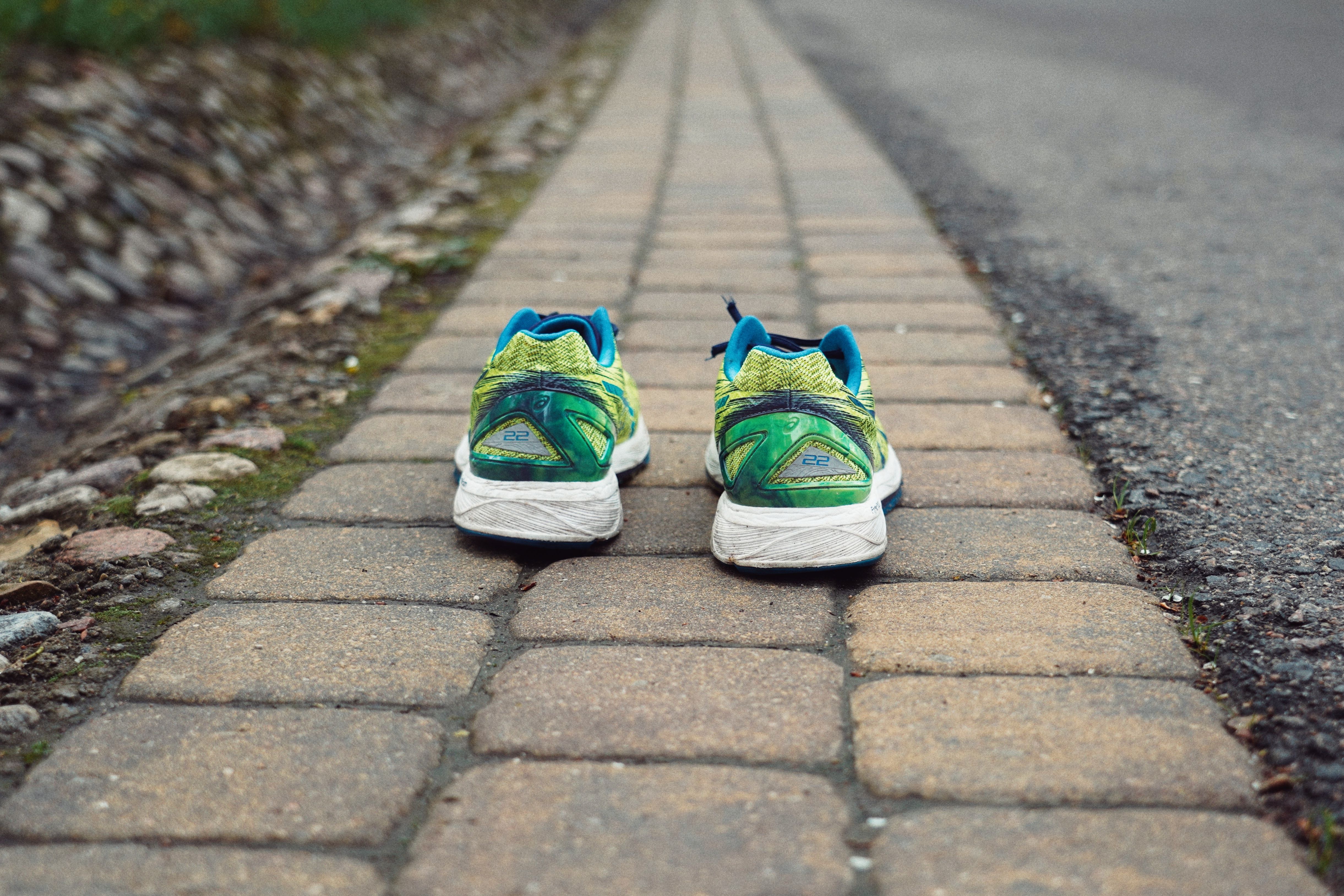 Running is a sport of pure repetition. During a standard 5k, your feet strike the ground roughly 3,500 times. If your mechanics are sound, your body absorbs and distributes this impact efficiently. But what happens when the platform you are landing on starts working against you?
Most runners judge a shoe’s lifespan by its "pop" or bounce. But the real danger of an aging daily trainer isn't just the loss of energy return—it is the subtle, invisible alteration of the shoe's geometry.
Here is exactly how uneven shoe wear alters your biomechanics and sets off a chain reaction of injuries.
The Geometry of Wear (The "Wedge" Effect)
Very few runners have a perfectly neutral footstrike. We all have natural biomechanical tendencies, such as mild supination (striking heavily on the outside edge of the foot) or overpronation (rolling inward).
In a fresh shoe, the EVA or PEBA foam and the thick rubber outsole compensate for this, providing a level, stable platform. However, as you push a shoe past 400km, that repetitive strike pattern begins to permanently compress the foam and shave down the rubber on your specific impact zones—most commonly the lateral (outer) heel.
If you wear down one side of the shoe by just 3 or 4 millimeters, you have effectively built a wedge into your footwear. Your shoe is no longer a neutral platform; it is actively forcing your foot to land at a compromised, exaggerated angle.
The Kinetic Chain Reaction
This forced angulation does not stay isolated in your foot. The human body operates as a kinetic chain, meaning an irregularity at the base instantly travels upward.
- The Ankle & Achilles: Landing on an artificially angled platform forces the ankle to over-correct upon impact, placing immense eccentric load on the Achilles tendon and the posterior tibial tendon.
- The Knee: As the ankle rolls excessively to find flat ground, the tibia (shin bone) rotates internally. This causes the knee to track out of alignment, drastically increasing the friction that leads to IT Band Syndrome and Runner's Knee.
- The Hips: To compensate for the knee and ankle instability, the hip stabilizers (gluteus medius) are forced to work overtime, leading to deep hip ache and lower back fatigue during long runs.
You might be foam-rolling your IT band religiously and doing your strength work, completely unaware that your structurally dead shoes are actively recreating the problem every time you hit the pavement.
Stop Guessing. Automate Your Gear.
By the time you visually notice a severe slant in your midsole, or feel that sharp pain in your knee, the foam has likely been structurally compromised for weeks. Relying on visual cues or a rough estimate of your mileage is a fast track to the physio table.
Your gear needs to protect you, not fight against you. That is why we built TreadLeft.
- Passive Wear Tracking: Connect your Strava or Apple Health account once. TreadLeft runs silently in the background, updating the exact mileage on your specific shoes after every run.
- Proactive Alerts: Get notified the moment your daily trainer crosses its safe lifespan threshold—before the structural collapse alters your stride.
- Data-Driven Replacements: When your shoes are dead, TreadLeft instantly scans the market to find you the best price on your replacement pair.
Don't let a 3-millimeter foam collapse derail your next training block. Protect your legs and track your rotation automatically.