 TreadLeft Blog
The Anatomy of a Dead Midsole: When Is It Time to Retire Your Running Shoes?
Discover what actually happens to your running shoes after 500km. Learn how to spot a dead midsole, prevent injuries, and know exactly when it is time to retire your trainers.
There is a dangerous lifecycle to every running shoe. Out of the box, they are a revelation—springy, supportive, and ready to absorb the impact of the road. But somewhere around the 500km to 600km mark, a silent shift happens. The shoe might still look perfectly fine from the top down, but the mechanics underneath have fundamentally broken down.
Running on dead foam is one of the fastest ways to derail a heavy training block. Here is exactly what happens when a shoe crosses the line from "worn in" to "worn out," and how you can stop guessing when it is time to let go.
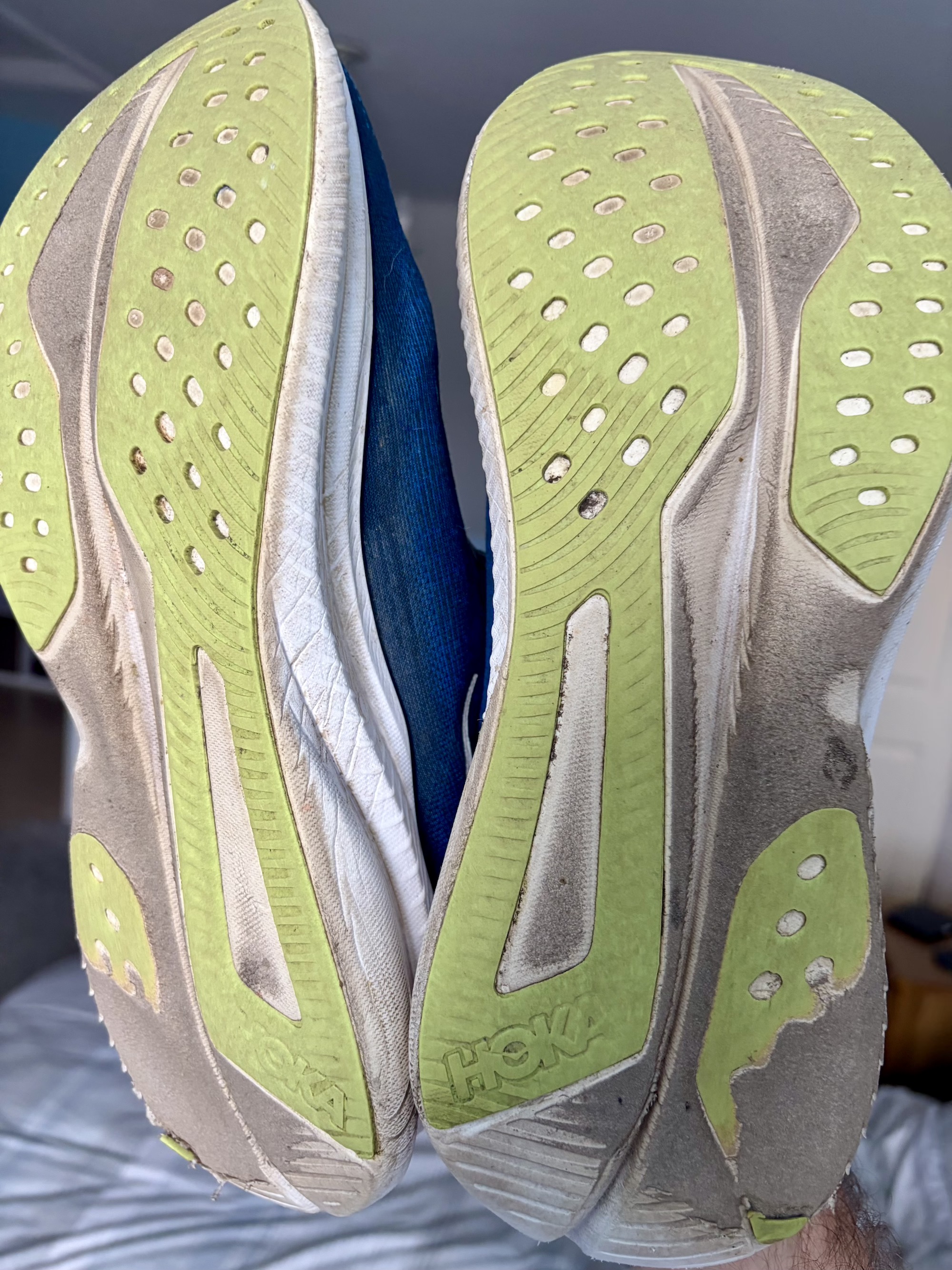
The Teardown: What Actually Fails?
Let's look at a prime example of a highly cushioned daily trainer, like the HOKA Mach series. It is a brilliant shoe that takes a beating, but what happens when you push it to 100% of its intended lifespan?
When you put a dead shoe under the microscope, three critical failures emerge:
- Midsole Compression (The "Flat Tire" Effect): The EVA or PEBA foam that gives the shoe its bounce loses its cellular memory. Instead of springing back after your foot strikes the pavement, it stays compressed. You are no longer getting energy return; your skeletal system is suddenly doing all the heavy lifting for shock absorption.
- Outsole Degradation: The rubber traction pads wear thin, especially on your specific strike zones (typically the lateral heel and the forefoot). This alters your natural biomechanics, subtly forcing your foot to land at a compromised angle to compensate for the uneven wear.
- Upper Stretching: The engineered mesh loses its structural integrity. Your foot begins to slide laterally during tight corners or on uneven surfaces, leading to friction blisters and ankle instability.
The Physical and Financial Cost
The friction point for most runners is financial. It is psychologically difficult to look at a £160 pair of shoes that still looks clean and relegate them to the recycling bin.
But here is the reality of the sport: pushing a shoe 150km past its expiration date is a false economy. The cost of a single physio appointment to treat the shin splints, Achilles tendinopathy, or runner's knee caused by dead foam will instantly exceed the cost of a fresh pair of trainers. Your gear needs to protect you, not fight against you.
Stop Guessing. Start Tracking with TreadLeft.
You shouldn't have to rely on a manual spreadsheet or a vague memory of when you bought a shoe to know if it is safe to run in.
TreadLeft is built precisely to solve this problem. It acts as the ultimate insurance policy for your legs by automating your entire gear rotation.
- Automated Mileage Tracking: Connect your Strava account once, and TreadLeft silently logs the exact distance against the specific shoe you deployed for that workout.
- Smart Wear Alerts: Get notified the moment your daily trainer enters the "Critical" wear zone, so you can replace it before the niggles and injuries start.
- Cost Per KM Analytics: See the exact financial efficiency of every shoe in your locker, proving which models actually give you the best return on investment.
Don't let a dead midsole ruin your next session. Track your rotation automatically.