 TreadLeft Blog
The 48-Hour Rule: Why Your Midsole Foam Needs a Rest Day
You wouldn't run a hard workout on back-to-back days without letting your muscles recover, yet most of us do exactly that to our running shoes. Here is the science behind the "48-Hour Rule" and why giving your midsole foam time to decompress can dramatically extend the life of your expensive trainers.
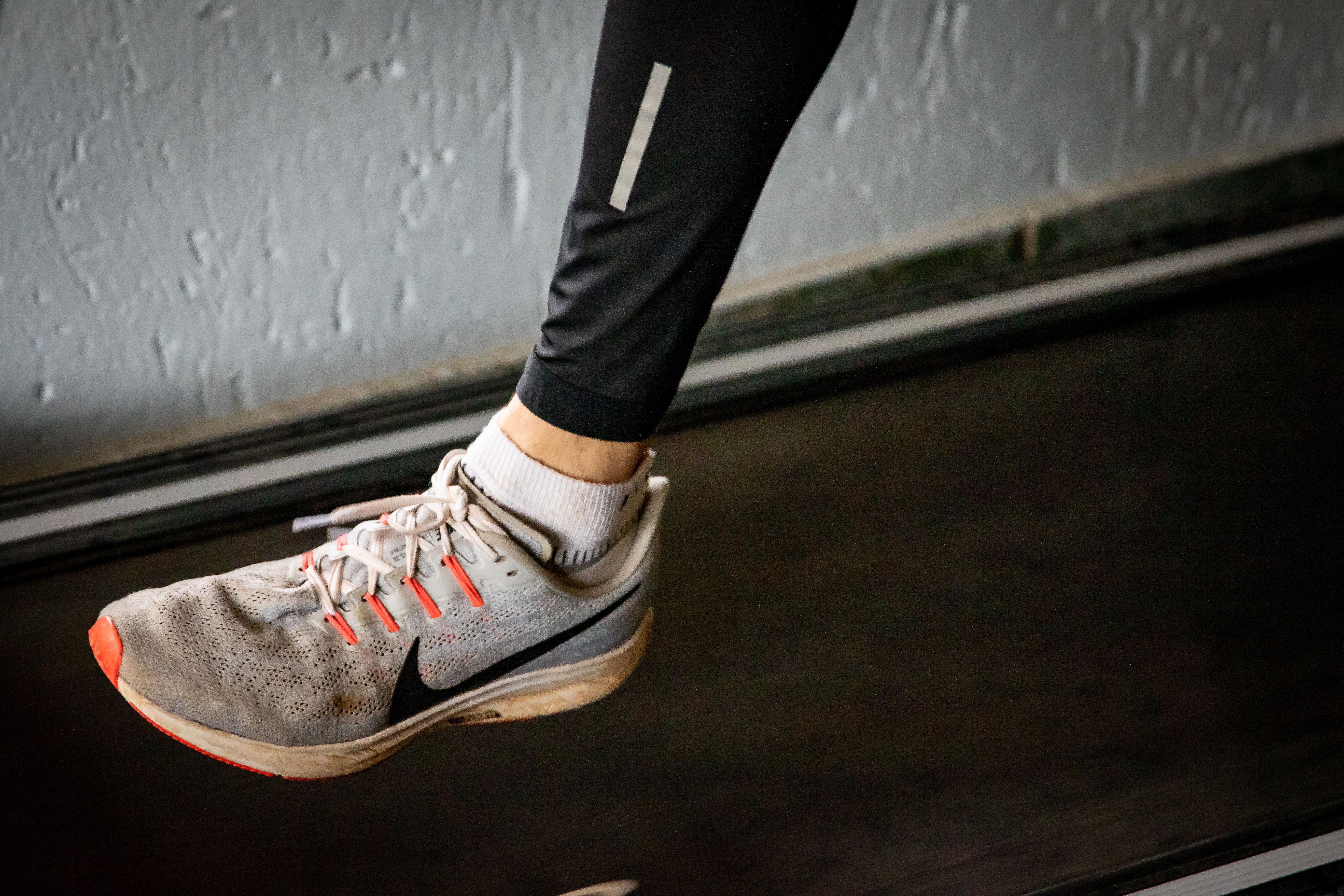 If you are running in the exact same pair of shoes every single day, you are quietly killing your foam—and your wallet.
We spend a lot of time thinking about how our bodies recover between runs, but we rarely think about our gear doing the same thing. Whether you are running in standard EVA foam daily trainers or high-end PEBA super shoes, the physical mechanics are identical: with every footstrike, you are compressing thousands of microscopic air pockets trapped inside the midsole.
That compression is what absorbs the shock and gives you that energetic bounce. But just like a stretched rubber band, those microscopic pockets need time to return to their original shape.
The Material Science of "Dead" Legs
When you finish a 10km run, the foam under your foot is physically thinner and denser than when you started.
If you take that exact same shoe out 24 hours later, the midsole hasn't fully decompressed. You are starting your run on compromised cushioning. Do this consistently, and the foam eventually loses its structural integrity completely. It "packs out," leaving you running on hard, lifeless material that transfers all the impact shock directly up your shins and knees.
Why 48 Hours is the Magic Number
Shoe manufacturers and biomechanics experts generally agree on the 48-Hour Rule: it takes roughly two full days for standard running shoe foam to fully expand and recover its optimal shock-absorbing properties.
This is the exact reason why having a two-shoe rotation is mathematically cheaper in the long run than burning through one pair at a time.
- The Single-Shoe Method: Buying one pair of daily trainers and wearing them every day might get you 500km before they feel completely dead.
- The Rotation Method: Buying two pairs and alternating them (giving each pair 48 hours to recover) will often get you 600km to 700km per pair, simply because the foam isn't being relentlessly crushed while compromised.
Automating the Rest Day
Managing a rotation manually is usually where things fall apart. Remembering which shoe you wore on Tuesday, tracking the mileage on both, and guessing if the foam is fully rested before your Thursday long run is just too much mental math.
This is exactly why we built the Foam Recovery Indicator directly into the TreadLeft dashboard.
When you log a run, the app doesn't just track the distance. It initiates a 48-hour recovery countdown for that specific shoe. The next time you open the app to head out the door, a quick glance at the "Up Next" card tells you instantly if a shoe's midsole is fully rested, still recovering, or completely dead.
You protect your knees, you protect your wallet, and you get the absolute maximum mileage out of every pair you buy.4